


Why Mobile Spaces Are Becoming the New Infrastructure for Athlete Branding, Merchandising, and Fan Engagement
- ROI Mantra Global Analytics
- 4 days ago
- 7 min read


Athletes today are operating in a different reality than even a decade ago. Branding, merchandising, and fan engagement are no longer confined to stadiums, arenas, or one-off event venues. They’re happening in parking lots before games, outside training facilities, near campuses, at pop-ups, and across cities during off-season schedules. In markets like Houston and Fort Worth, where professional franchises, collegiate programs, and independent athletes coexist, this shift is especially visible.
What’s emerging is a new class of mobile space for athletes, designed not as temporary activations, but as repeatable infrastructure supporting branding, merchandising, and fan engagement wherever athletes play or go.
From Endorsements to Infrastructure: How Athlete Branding Has Changed
For years, athlete branding lived inside other people’s environments. Arenas, sponsor booths, rented pop-ups, temporary activations. The athlete arrived, participated, and left. Control over layout, flow, merchandising, and experience was often secondary to access.
That model is thinning out.
Athletes are now expected to operate like businesses. They launch merchandise lines, build media platforms, manage partnerships, and engage fans directly. Branding has shifted from a moment to a system, something that needs consistency, repeatability, and operational clarity. When brand presence becomes ongoing rather than occasional, space stops being a backdrop and starts becoming infrastructure.
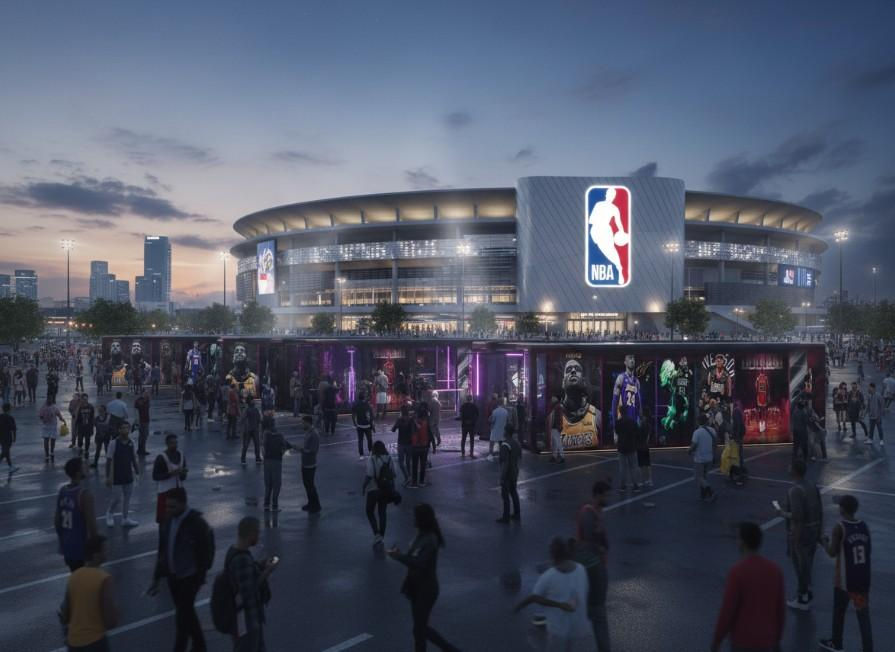
This shift is why mobile environments are increasingly being designed as a marketing space for the NBA and other athletes, rather than short-term promotional setups that disappear after a single appearance. It’s also the foundation on which Guesscreative was built: treating space as a working system rather than a temporary stage.

Why the Old Activation Model Is Breaking Down
Fixed venues come with tradeoffs that are easy to overlook until you operate inside them. Fees stack up. Time windows are narrow. Visual control is limited. Merchandising is constrained by layouts that weren’t designed for retail flow. Engagement is fragmented by shared environments competing for attention.
One-off pop-ups solve short-term visibility but reset everything the next time an athlete wants to show up. Teams rebuild. Partners re-approve. Operations restart from scratch. Nothing compounds.
The issue isn’t effort or creativity. It’s structure. Activation models built for campaigns struggle when applied to brands that need to show up repeatedly, across locations, with consistency.
What “Infrastructure” Actually Means for Athletes
When we talk about infrastructure in the context of athlete branding, we’re not talking about permanence for its own sake. We’re talking about systems.
Infrastructure is repeatable. It’s code-compliant and designed to operate safely in real environments. It’s clear in how people move through it, how staff work within it, and how it adapts across locations. Most importantly, it’s built to last, not just physically, but operationally too.
Ownership matters here because ownership allows learning, iteration, and control. Without those, space stays temporary, no matter how refined it looks.
One Space, Four Jobs: Branding, Merchandising, Mobile Athlete Engagement, and Athlete Recovery
When mobile spaces are treated as infrastructure, they are expected to perform multiple functions simultaneously. The most effective environments don’t separate these roles. They integrate them into a single, repeatable system that travels with the athlete.
Brand Presence
Consistent visual identity across locations
Controlled storytelling without venue interference
A recognizable environment fans associate directly with the athlete
Merchandising
Designed retail flow, not improvised tables
Storage, inventory access, and efficient checkout
Direct-to-fan revenue inside an owned environment
In practice, this turns the environment into a mobile sports merchandising trailer, rather than a temporary sales point tied to a single event.
Fan Engagement
Experiences that encourage time spent, not just foot traffic
Built-in opportunities for content capture and interaction
Engagement designed into the space, not layered on top
When these functions operate within one system, the space works more efficiently. When they’re split across borrowed or rented environments, efficiency and impact drop.
Athlete Recovery
A controlled, private environment for post-game and between-obligation recovery
Designed separation from stadium and event environments
Support for physical reset, mental focus, and performance continuity
When recovery is integrated into the same mobile system as branding, merchandising, and engagement, athletes avoid fragmented setups and last-minute improvisation. When recovery depends on borrowed rooms or ad-hoc spaces, consistency breaks, and performance suffers.

Professional vs Collegiate Athletes: Same Direction, Different Constraints
Athletes across levels are moving toward ownership and direct engagement, but the constraints they operate under vary.
Professional Athletes (NBA / NFL)
Professional athletes increasingly operate like touring brands. Whether it’s an NFL athlete branding and merchandising trailer or a multi-city brand presence for elite NBA stars, consistency, durability, and control at scale matter more than novelty.
Collegiate Athletes (NIL Era)
Collegiate athletes face different pressures. NIL has accelerated demand for fast, compliant, and repeatable activations. A college basketball athlete activation setup often needs to deploy quickly, operate near campus environments, and scale without permanent construction.
Despite these differences, both groups face the same underlying challenge. Borrowed environments don’t scale. Mobility and repeatability aren’t conveniences. They’re requirements.
Why Mobile Systems Win Long-Term
This is where the difference between activations and infrastructure becomes clear.
Owned mobile systems improve with use. Each deployment refines operations, shortens setup time, and clarifies what works. Knowledge compounds. Efficiency compounds. Brand recognition compounds.
Mobile systems also align with how athlete schedules actually function. Seasons, off-seasons, tours, appearances, and regional demand shift constantly. Fixed spaces can’t adapt fast enough. Mobile systems move when opportunity moves.
From a business perspective, ownership changes decision-making. Instead of asking whether an activation is worth the cost each time, athletes evaluate how an existing system can be deployed again. The space becomes an asset, not an expense.
This long-term view is why repeatable mobile systems outperform one-off builds. They create continuity, reduce friction, and support growth without reinvention. As I’ve seen firsthand building these environments, infrastructure thinking isn’t about scale for scale’s sake. It’s about removing friction so brands can focus on what they’re meant to do.
- Gueston Smith, Founder and Principal Designer
LA Olympics 2028: Convenience and Mobility as Athlete Infrastructure
Los Angeles is going to be the host city of the Olympic Games in 2028, and it's shaping up to be a whole different experience compared to how things have been done in the past. Unlike some past Olympic host cities, which have been a more compact affair, LA is basically going to host events across a wide swathe of the city with venues, training sites, media hubs, and all sorts of other stuff scattered all over the place. And for the athletes, this is going to open up a whole new world of possibilities as to where and how they get to be seen, prepare for the big event, and interact with all the various sponsors and partners.
This scale introduces a practical challenge. Fixed venues alone cannot support the movement, flexibility, and operational control that athletes and sponsors will require during the Games.
Athlete Operations Will Extend Beyond Official Venues
Olympic participation does not limit athlete activity to competition sites. During LA 2028, athletes will engage across multiple contexts:
Training and recovery locations
Sponsor and partner obligations
Media appearances and content production
Community and cultural activations
Limited-run merchandising moments
Each of these moments requires an environment that can operate independently of Olympic infrastructure while maintaining consistency and control.
Mobility Becomes a Functional Requirement
In a city like Los Angeles, convenience is infrastructure. Mobile spaces allow athletes to:
Reduce transit friction across a geographically large host city
Maintain consistent brand environments regardless of location
Deploy quickly without repeated build-outs or venue dependencies
Operate within compressed schedules without sacrificing quality
This level of mobility supports performance as much as presence.
Why Mobile Systems Matter at Olympic Scale
During a global event like the Olympics, temporary solutions break down quickly. Mobile systems, when designed as infrastructure, offer:
Repeatable deployment across multiple sites
Predictable operations under high pressure
Controlled brand and merchandising environments
Faster setup and teardown without redesign
Rather than reacting to each appearance or obligation, athletes and sponsors operate from a prepared, owned system.
LA 2028 amplifies the need for mobile athlete infrastructure. The scale, movement, and visibility of the games simply make the requirement unavoidable. This is the type of environment Guesscreative designs for, where mobility, repeatability, and long-term operational clarity are treated as a foundation.

What a Purpose-Built Athlete Mobile Space Actually Requires
Concepts become infrastructure only when they work in the real world.
Purpose-built mobile spaces account for power, HVAC, and ventilation that support people and equipment. They manage crowd flow and accessibility intentionally. Storage, staffing workflow, and security are designed into the layout. Connectivity and point-of-sale systems are reliable, not assumed.
Permitting and jurisdictional awareness determine whether a deployment happens smoothly or stalls entirely. Modular interiors allow partners, sponsors, and use cases to evolve without rebuilding the space from scratch.
This operational clarity is what separates systems that last from ideas that peak once.
Why This Shift Matters Now
Athlete brands are no longer temporary. Fan expectations are experiential. Markets reward speed, proximity, and consistency. The tools to build durable systems now exist at a level they didn’t before.
A mobile experiential trailer or a mobile promotional space for sports athletes is no longer about visibility alone. It’s about control, continuity, and long-term value. Infrastructure thinking is arriving later in sports than in other industries, but it’s arriving decisively. Those who understand systems early don’t just activate. They establish foundations.

Start with a Vision Call
If you’re exploring how a mobile space could function as long-term infrastructure for athlete branding, merchandising, and fan engagement, not just a one-off activation, a Vision Call is the right place to start. At Guesscreative, this conversation is used to understand goals, constraints, and deployment context before any design decisions are made.
Request a Vision Call
Frequently Asked Questions
Do you design mobile spaces for athletes in Houston and Fort Worth?
Yes. Guesscreative designs and supports mobile athlete space deployments across major Texas markets, including Houston and Fort Worth, subject to permitting and operational requirements.
What stage should an athlete or team be in before exploring a mobile space system?
A sports athlete's mobile engagement setup makes the most sense when branding, merchandising, or fan engagement is planned across multiple locations or seasons, rather than a single appearance.
Are these spaces intended to replace traditional venues or events?
No. Mobile systems are designed to complement existing venues by creating an owned environment that operates independently or alongside events.
Sports athlete mobile engagement setup in Fort Worth


Comments