
Finding Deployable Space in Lisbon


Field notes on business, ownership, and putting useful space where it is needed.
By Gueston Smith, Founder of Guesscreative®
I came to Lisbon with an open mind.
I had visited briefly in my early twenties, and something about the city stayed with me. I remember seeing a lot of Black people, people who reminded me of myself. That sense of familiarity in an unfamiliar place became part of my curiosity about Lisbon.
Years later, I wanted to return and spend enough time here to get to know it. To walk, watch, follow my curiosity, and see what caught my attention.
As I explored, I began noticing something familiar.
Food trailers along the waterfront. Containers used for exhibitions. Compact bike rental shops. Market stalls. Temporary field offices supporting construction teams.
These were different expressions of something I had already been building through Guesscreative: useful space that can be deployed around an operation and its needs.
I started photographing them and paying closer attention. What happened inside? What happened around them? Why did that particular structure make sense there?
What began as an unexpected pattern became a way to think more deeply about the relationship between space, business, and place.
Different structures, shared capability
The spaces I encountered served very different purposes. Some supported commerce, others construction, tourism, or cultural activity. Their materials, appearance, and relationships to movement varied. But each established a capability in a particular place.
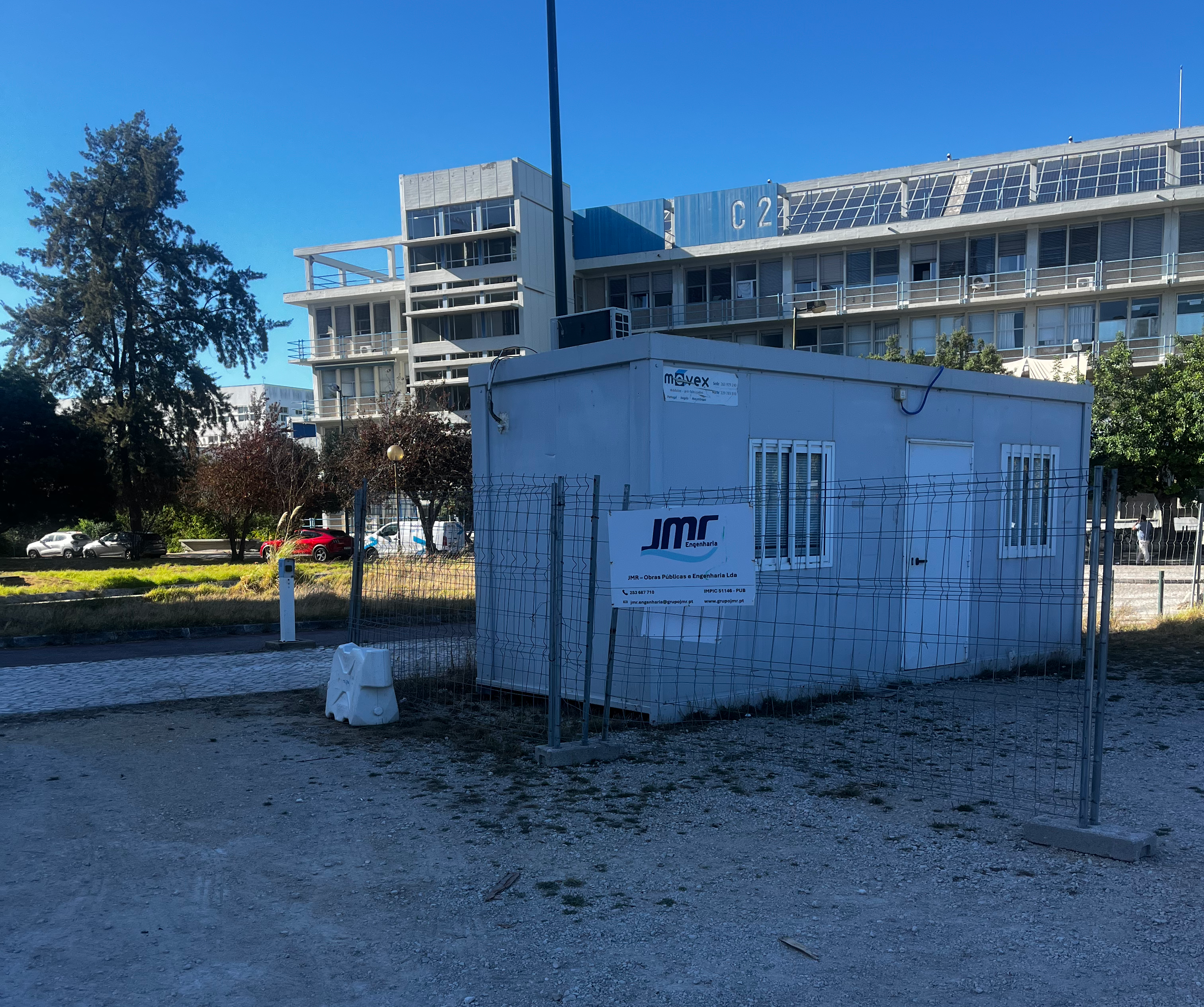
A trailer supported a food business. A compact structure created a bike rental point. A container housed an exhibition. A field office gave a construction team a base beside its work.
Their value came from the activity they supported and how well they fit their surroundings.
That is the question I kept returning to: What does this space make possible here?
The space extends beyond the unit

Several businesses occupied little enclosed space while supporting activity across a much larger area.
A food trailer can contain the kitchen, storage, equipment, and service window. Customers gather outside. Tables provide places to sit. Trees offer shade. The pedestrian route brings people past the business. The unit and its surroundings work together.
At USC's School of Architecture, we considered what happened both within and around built space. These Lisbon examples gave me another setting in which to observe that relationship, with a particularly compact piece of infrastructure serving as the anchor.
For an operator, this raises a practical design question:
Which functions need to be inside the asset, and which can be supported by the site?
The answer determines much more than square footage. It shapes service, circulation, weather protection, accessibility, storage, and the customer experience.
A compact unit depends on a well-chosen site and a workable arrangement for using it. Outdoor seating, pedestrian access, utilities, and surrounding activity all become part of the operating plan.
Designing the unit therefore means understanding the entire deployment.


Match movement to the operation
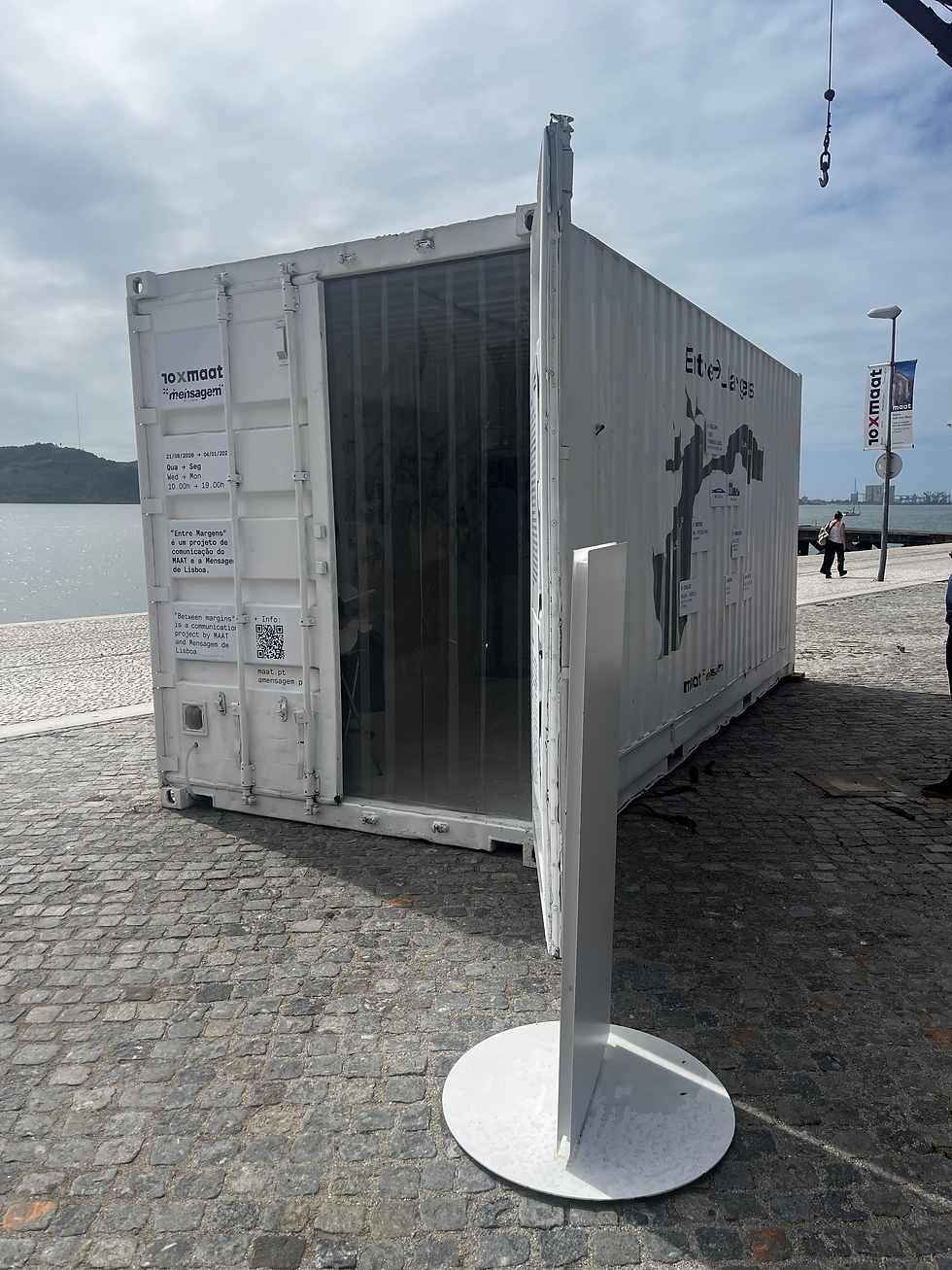
As I encountered more examples, I noticed how differently they related to movement.
Some had wheels and could be towed. Others would require lifting equipment or a transport vehicle. Some appeared to remain in place for extended periods.
I could not tell me how frequently a structure moves or what relocation would require inn the short time that I was there. It can, however, bring forward useful questions about how that space was designed to be placed, used, and moved again.
A food business attending events may need frequent movement and rapid setup. A learning environment may stay on a campus for a semester. A field office may remain beside a construction project until the work is complete. Each has different requirements for transport, connections, durability, and deployment labor.
The degree of mobility should serve the operation.
Design begins with the intended use, location, and duration. Those conditions help determine whether a towable, relocatable, or fixed environment makes sense.

The duration of deployment can match the duration of the need
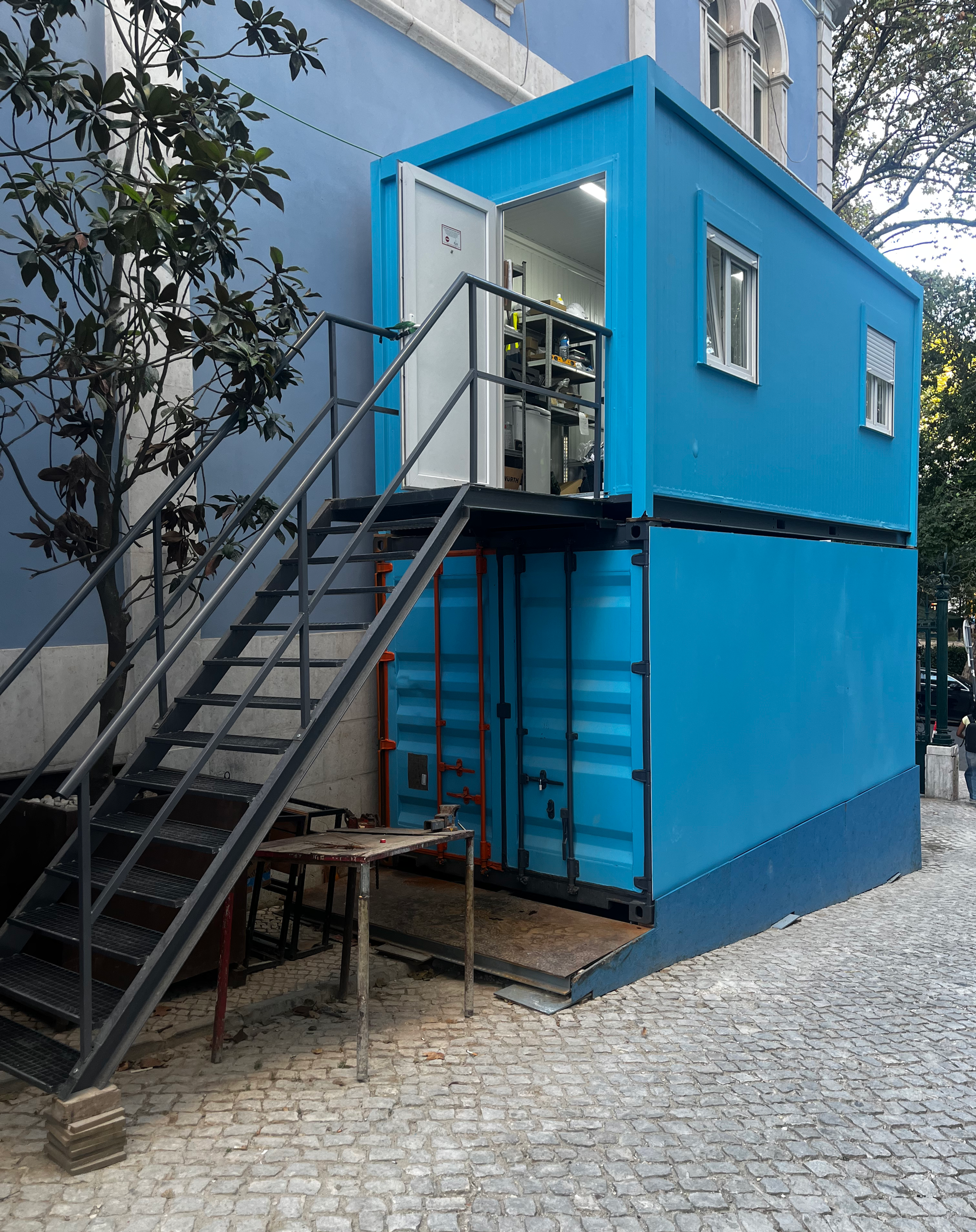
One example made that relationship especially clear.
At an active construction site, a stacked arrangement of container-based units provided a field office above tool storage. An exterior steel staircase connected the upper office to the ground. I watched members of the construction team move in and out. This was working infrastructure supporting a real project. The arrangement brought workspace and storage close to the work. Tools were accessible at ground level, while the office occupied the space above. Two functions shared essentially the same footprint.
The setup demonstrated how a temporary operation can be supported by infrastructure suited to its duration. When the project ends, a relocatable field office can potentially serve another site.
The duration of deployment can match the duration of the need, while the asset continues to serve future operations.
That principle reaches beyond construction. Seasonal businesses, outreach programs, temporary classrooms, and events all have spatial needs tied to a particular period of activity. The design task is to support the current deployment while preserving usefulness for the next one.
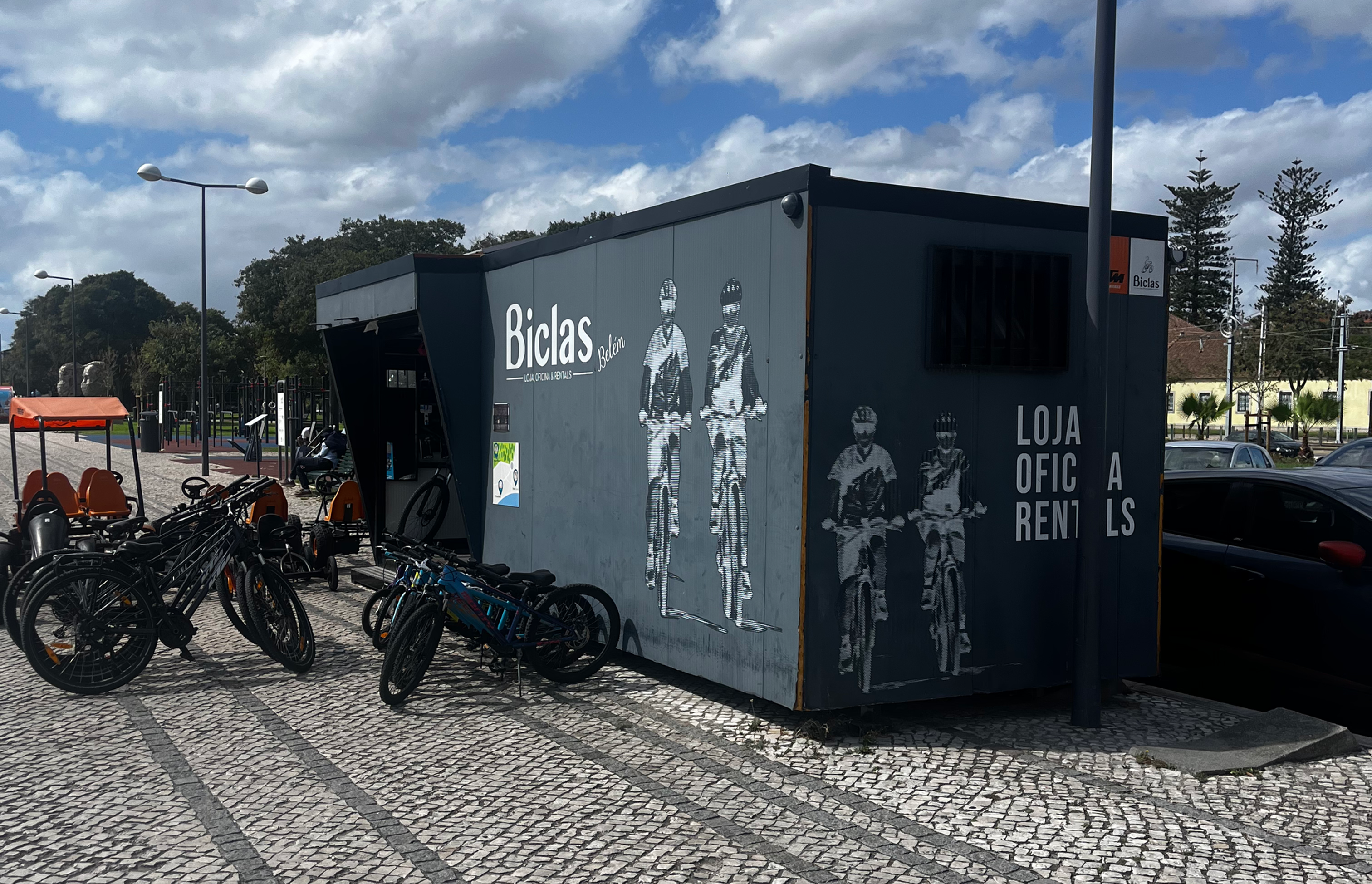
Brand helps the environment communicate

The commercial spaces also showed how strongly design influences recognition.
Color, graphics, geometry, materials, signage, and service openings helped businesses communicate what they offered. The approach to a unit and the position of its counter shaped how someone became a customer.
A person walking past needs to understand the offer quickly: what happens here, where to approach, and how to participate.
That makes brand a spatial consideration. It affects the layout, visibility, service sequence, and experience of using the environment.
The space should help people understand the business before the operator has to explain it.
For a business deploying in several locations, a recognizable environment can also provide continuity. The site changes, while the business carries a familiar identity and service experience with it.
Design the space around the business
These observations connected to a larger question in my work: how closely does the space fit the operation it supports?
A business may find an available property, assess its location and cost, then adapt its operations to the existing layout. That can be an excellent decision. A well-positioned storefront, a carefully designed interior, or a purpose-built permanent facility can support a business for decades.
The challenge arises when the available space requires significant compromises in workflow, capacity, customer experience, or location strategy. An operator may also invest substantial money in a leased environment that cannot move with the business. Equipment and some furnishings may be recoverable, while much of the buildout remains attached to the property.
Deployable infrastructure gives suitable operations another option: a spatial asset designed around their requirements and prepared for use across compatible sites.
That starts with concrete questions.
What must the team do each day?
What equipment is required?
How do customers arrive and move through the experience?
Where is demand?
How long should the operation remain there?
Do I have what I need to transport, operate and maintain the space?
The resulting environment might be permanent, deployable, or a combination of both.
The objective is a better fit between the operation and the space that supports it.
Capital commitment should reflect operational certainty
The business implications become clearer when we consider what happens if plans change.
An operator may sign a long lease and fund a substantial buildout before demand, workflow, or location performance has been fully established. If the business needs to move, some of that investment may be difficult to recover.
The question is how much capital becomes tied to one location, for how long, and with what ability to adapt.
An owned deployable environment can allow an operator to carry more of that investment into the next deployment. Depending on the system, the structure, equipment, brand elements, and working layout can remain useful when the location changes. This creates room to test a site, observe demand, refine the operation, and redeploy when appropriate.
That flexibility has costs. Transportation, setup, maintenance, storage, site access, and utility connections all belong in the business model. Moving only creates an advantage when the value of redeployment justifies those requirements.
The meaningful comparison is the full operating arrangement: what it costs, what it enables, and how much value the business retains as conditions change.
Deployability becomes economically useful when it preserves valuable choices at a manageable cost.
Ownership and location can be separate decisions
My photographs show how these spaces were being used. They do not establish who owned them, how they were financed, or whether the businesses were profitable.
But they prompted a question that matters to Guesscreative:
What spatial infrastructure should a business own, and where should it operate?
An operator can own a deployable unit while securing permission to use sites through leases, partnerships, or other agreements. Owning the unit does not resolve access to land, utilities, or customers. Those relationships remain essential.
What it can do is allow ownership of the operating environment to extend beyond a single address.
A business may keep a permanent base for storage, administration, production, or training, then use deployable environments to reach customers elsewhere. A school can maintain its campus while extending a program into other communities. A brand can establish a flagship and carry a consistent experience into new markets.
Fixed anchors and deployable reach can work together.
This is central to Spatial Entrepreneurship™: thinking deliberately about how space supports activity, ownership, and growth.
It is also what I mean by Space is Capital. Investment in space creates productive capacity. The quality of that investment depends on how well it serves the operation, how it is controlled, and how much usefulness it retains over time.
Five questions for deployable space
The Lisbon observations brought five questions into sharper focus:
What does it activate? What service, commerce, learning, or activity becomes possible inside and around the environment?
What does it require? What site access, permissions, power, water, waste handling, communications, staffing, accessibility, and security are necessary to operate?
How does it move? What transport, lifting equipment, disassembly, connections, and labor are required, and how often is movement expected?
How quickly does it become operational? What must happen between arrival and readiness to serve, including positioning, setup, connections, and any required checks?
What remains valuable when the location changes? How much of the structure, equipment, layout, brand system, and operating knowledge can serve the next deployment?
Together, these questions connect design decisions to actual use. They help determine whether deployability is worth investing in and what the system must do to make that investment productive.
What I found by paying attention
I came to Lisbon because I wanted to know the city. The connection to my work emerged as I walked and observed.
Alongside its buildings, streets, and public spaces, I found compact pieces of infrastructure supporting everyday life. Food businesses, rental operations, exhibitions, and construction teams were using spaces suited to particular activities and places.
That reinforced the direction I am building through Guesscreative.
Architecture continues to create extraordinary spaces. Deployable infrastructure extends the range of ways we can provide useful environments, particularly where operations benefit from relocation, temporary capacity, replication, or reach beyond a permanent base.
The question guiding our work is:
What relationship between space, capital, ownership, location, and time best serves the operation?
Lisbon gave me tangible examples to think with. Small environments could support larger experiences. Temporary needs could be served by reusable assets. A business could carry its identity and operating capacity into a place where people were already gathering.
The opportunity is to put the right space in the right place, for the right amount of time, so that something becomes possible there.
That is the work I want Guesscreative to advance: infrastructure that helps people and organizations move opportunity where it is needed.
What space does your operation need?
Whether you’re launching a business, extending a program, or reaching new locations, Guesscreative® can help you explore how deployable space could support your goals.


Comments